
recently, The 7th Jinfeng Stem Cell Academic Lecture Successfully held. This issue focuses on "Tumor Immunotherapy and the Frontier of Intelligent Medicine". Professor Chen Chong from West China Hospital of Sichuan University, Professor Jia Da from West China Second Hospital of Sichuan University, and Niu Hui, an expert in Standard BioTools application, are invited as guest speakers. Scientific researchers conducted in-depth discussions on the immune resistance mechanism of lung cancer, AI-assisted biological research, and cutting-edge mass spectrometry technology, creating a strong academic atmosphere.
Topic 1: Research on the resistance mechanism of immunotherapy in lung cancer
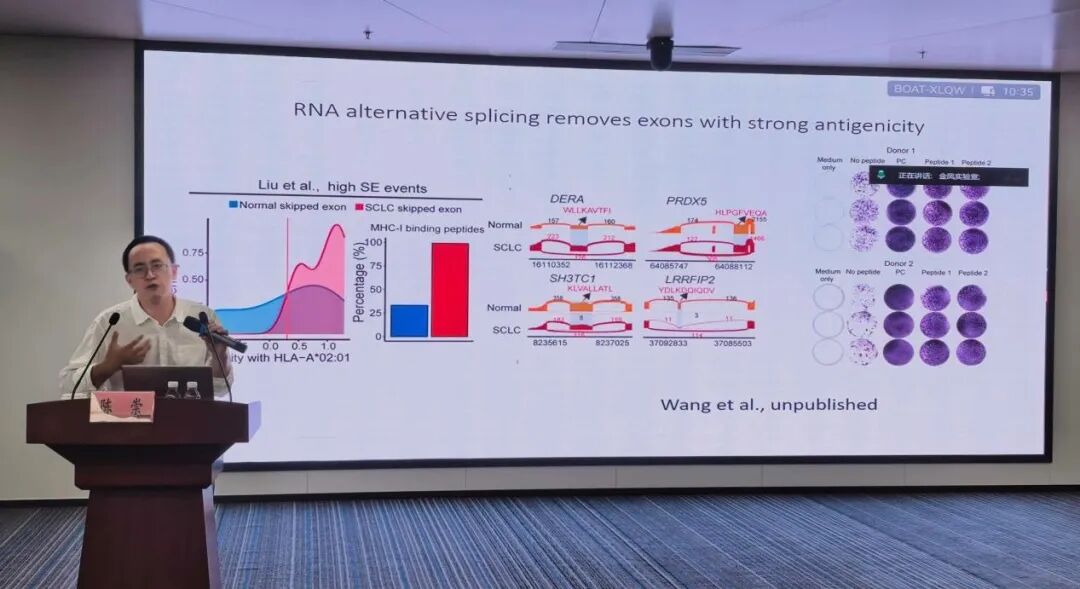
Introduction to the speaker
Chen Chong, Professor and doctoral supervisor at the National Key Laboratory of Biotherapy, West China Hospital of Sichuan University. He received his bachelor's degree from Peking University in 1999 and his doctorate from the University of Michigan in 2009. Focus on studying the mechanisms of malignant tumor evolution, especially epigenetic and lineage plasticity mechanisms in metastasis and drug resistance. 。
Key points of the lecture
This lecture focuses on immune drug resistance research in lung cancer (especially small cell lung cancer): the team established a rapid orthotopic tumor model with organoids combined with gene editing.; It was found that the ASCL1–IGFBP5–IGF1R axis regulates the BVG structure to block T cell infiltration, and OSI‑906 combined with immune checkpoint inhibitors can enhance the effect ; At the same time, two new drug resistance mechanisms were revealed: non-small cell lung cancer upregulates collagen to form a physical barrier, and small cell lung cancer occults neoantigens through PRMT5-mediated RNA splicing, providing support for the development of drug resistance targets. 。
Topic 2: Accelerate your journey of exploration with the help of "Xunzi"
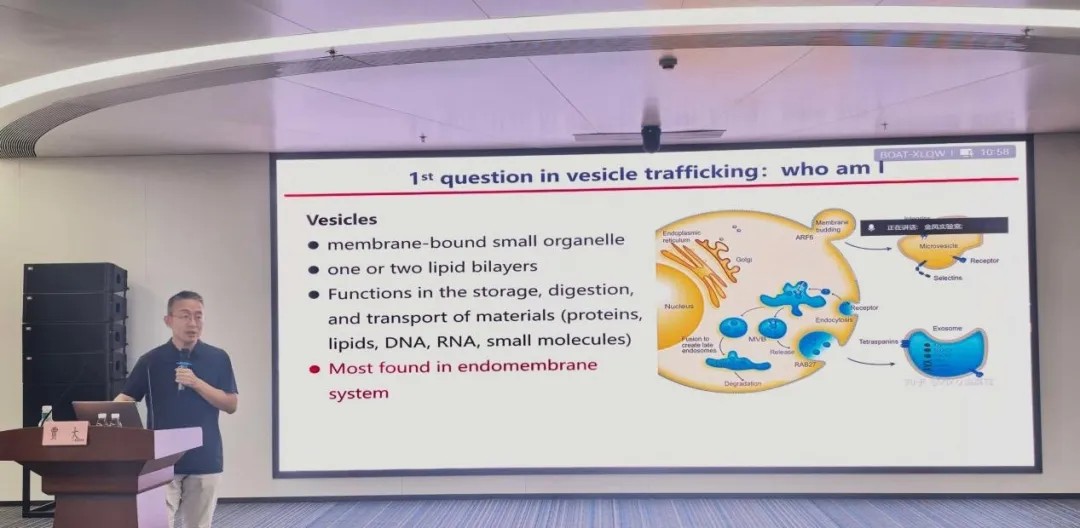
Introduction to the speaker
Jia Da, Professor and doctoral supervisor at the West China Second Hospital of Sichuan University and the State Key Laboratory of Biotherapy, and deputy director of the Research Institute of the West China Second Hospital. National Distinguished Young Scholars, national overseas high-level young talents. Mainly studies the dynamic regulation of organelles, vesicle transport, the pathogenic mechanisms of related neurological and metabolic diseases, and develops treatments. 。
Key points of the lecture
This lecture updated the traditional understanding of vesicle transport, confirmed that cargo proteins can actively drive vesicle assembly, and revealed the dual-fidelity transport regulatory mechanism of "coat recognition + tethering review" mediated by the tandem super acidic cluster (SAC) motif. The report focuses on AI biologist XunZi (Xunzi). This platform integrates biomedical logical reasoning and multi-modal big data, and can automatically generate experimentally verifiable biological hypotheses. It has been used to mine targets for Parkinson's disease and non-small cell lung cancer. ; Among them, the Parkinson's disease target CHK2 has been verified in cell and animal models, significantly shortening the hypothesis discovery cycle. The research integrates basic mechanism analysis with AI scientific research tools to build a new research paradigm for disease target discovery. 。
Topic 3: Mass Cytometry and Tissue Imaging Mass Cytometry—From Single Cell Analysis to Tissue Space Insights
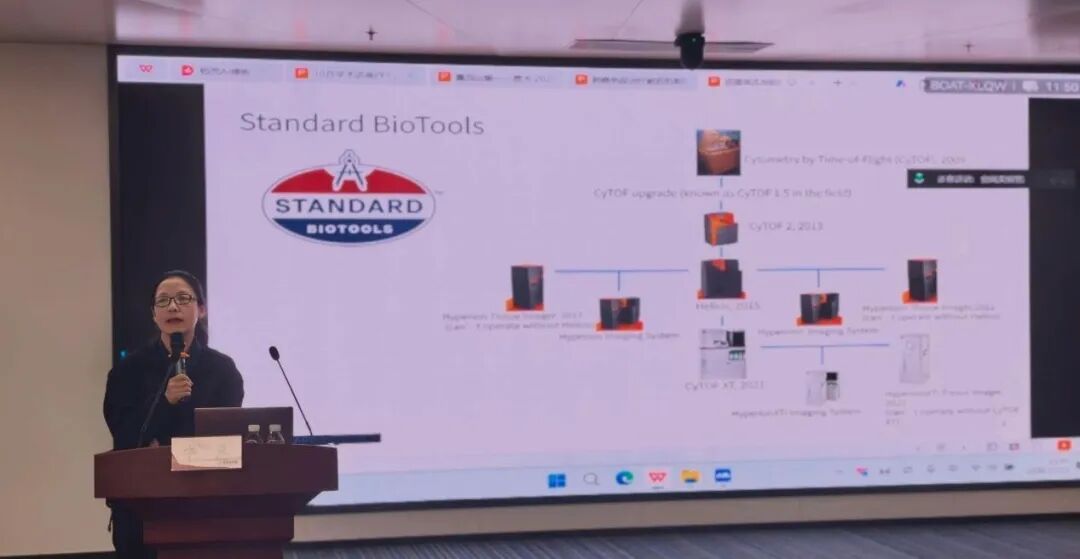
Introduction to the speaker
Niu Hui, Standard BioTools is a field application expert in China, focusing on technical support, user training and project implementation of mass spectrometry and tissue imaging mass cytometry. He is familiar with research plan design, antibody panel design, sample preparation, instrument detection and data analysis processes, and can provide targeted technical solutions according to different research needs. 。
Key points of the lecture
This lecture compares the shortcomings of traditional fluorescence flow cytometry and tissue imaging, such as limited channel number, spectral interference, large sample consumption, tissue autofluorescence interference, etc., and introduces mass spectrometry flow cytometry (CyTOF) with the help of metal isotope-labeled antibodies, which can detect 50+ protein indicators in a single tube.; Tissue imaging mass cytometry (IMC) can achieve 40+ protein imaging in a single slice while retaining the in-situ structure of the tissue and avoiding autofluorescence interference. The combination of the two technologies opens up single cell functional information and tissue spatial information, which is suitable for cell heterogeneity analysis, tumor immune microenvironment research, and cell therapy effect evaluation, and provides single cell-space multi-dimensional research evidence for cancer and stem cell-related research.
This lecture starts from The analysis of the basic mechanisms of tumors, the development of intelligent scientific research tools, and the application of cutting-edge technology platforms are progressing step by step. Faced with the key scientific issues in tumor immune transformation research, it brought multiple inspirations to the scientific researchers present in mechanism research, AI-assisted scientific research, and single-cell space technology applications. Participants said that the lecture content was close to the cutting edge, broadened research ideas, and gained a lot.


Number
023-68059937
Email:Jinfeng@jflab.ac.cn
Address:
No.313, Bella Road Chongqing High-tech Zone
Postal code: 401329

 渝公网安备50009802002274