
Recently, the sixth Jinfeng Stem Cell Academic Lecture was successfully held. This issue focused on "Stem Cells and Organoids Cutting-Edge Technology and Quality Evaluation System", and invited researcher Qu Zhe from the China Institute of Drug Control, Wang Xixian from the Qingdao Institute of Bioenergy and Processes, Chinese Academy of Sciences, and Wang Zheng from the Jinfeng Laboratory as guest speakers. Many scientific researchers had in-depth exchanges on cutting-edge technologies and quality control system construction issues such as organoids and organ-chip regulatory strategies, single-cell Raman rapid sterility testing, and stem cell product quality control. The academic atmosphere at the site was strong.
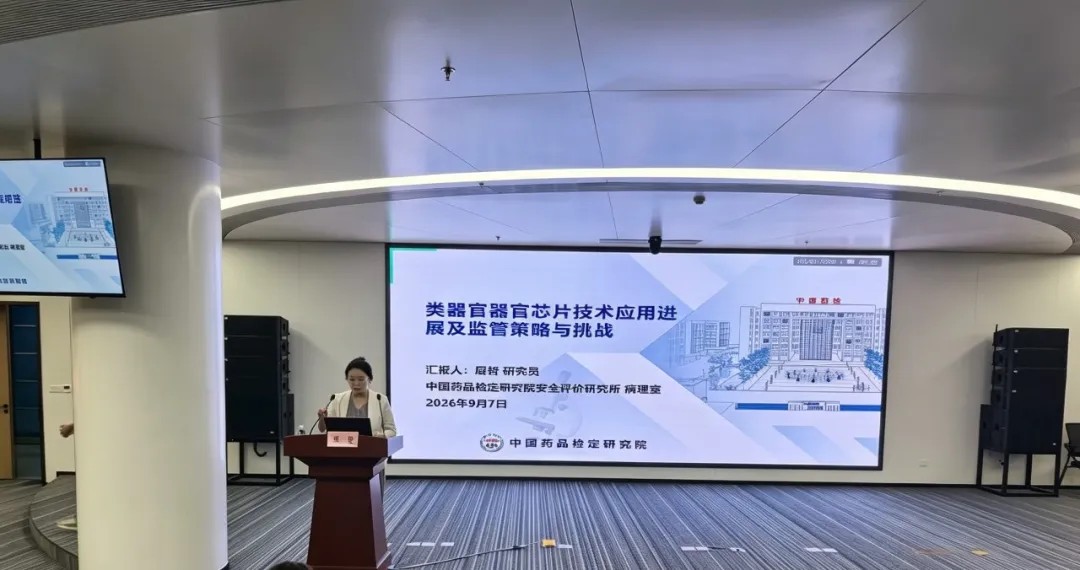
Lecture 1: Application progress and regulatory strategies and challenges of organoids and organ-on-a-chip technologies
Introduction to the speaker
Qu Zhe, Deputy director of the Pathology Department of the Institute of Safety Evaluation of the China National Institute for Drug Control, a non-clinical drug (GLP) inspector of the State Drug Administration, and an expert in the field of innovative drug research and development in the National Science and Technology Expert Database.
Key points of the lecture
This lecture systematically reviews the regulatory framework and standardization progress of the European Union, the United States, China and international organizations in the fields of new methodologies (NAMs) such as organoids and organ-on-chips, analyzes the main challenges from laboratory prototypes to regulatory approval, and explores collaborative innovation paths between industry, academia, research and supervision. At the same time, relying on the paradigm of "platform capacity building + key topic research + multi-center joint verification", phased results have been achieved in performance evaluation, quality standards and joint verification, aiming to build a collaborative innovation system that runs through the entire chain of "industry, academia, research and supervision" to provide systematic support for the standardized development of new technology methods and the scientific application of supervision 。
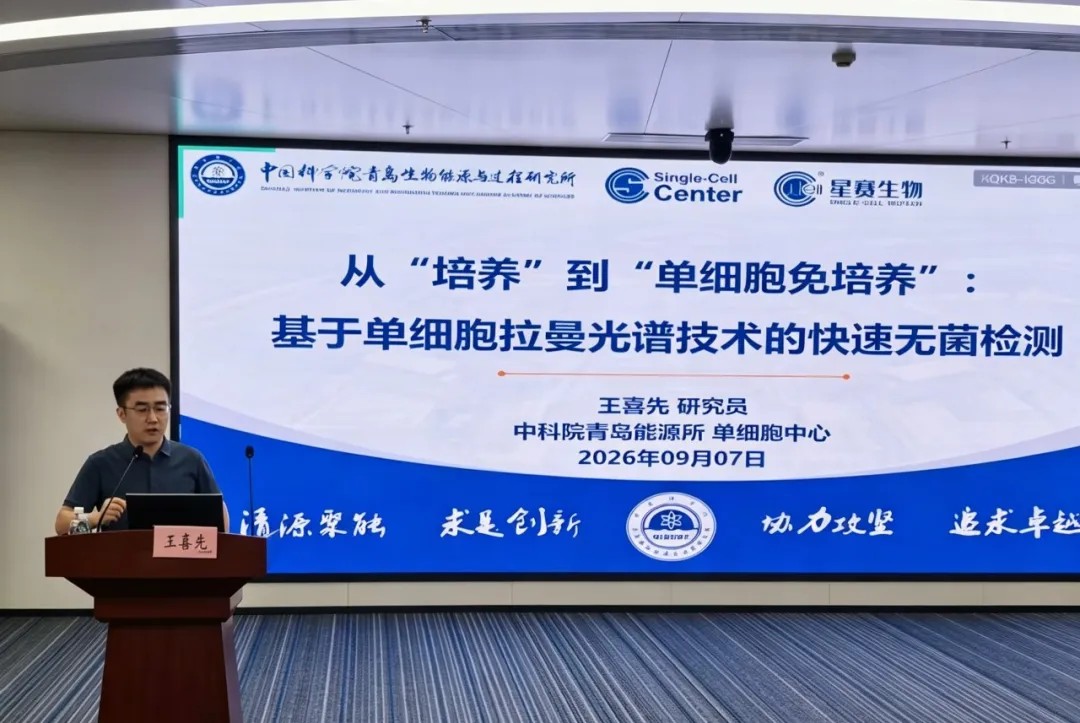
speak Seat two: From "culture" to "single cell culture-free": rapid sterility detection based on single-cell Raman spectroscopy technology
Introduction to the speaker
Wang Xixian , leader of the instrument engineering team of the Single Cell Center of Qingdao Institute of Bioenergy and Processes, Chinese Academy of Sciences, Taishan Scholar Young Expert of Shandong Province, and member of the Youth Promotion Association of the Chinese Academy of Sciences.
Key points of the lecture
This lecture focused on the sterility quality control needs of cell and gene therapy (CGT) products. Researcher Wang Xixian said that the traditional culture method for sterility testing takes 14 days, which not only restricts product implementation, but also makes it difficult to take into account detection speed, sensitivity and accuracy in complex cell matrix samples. The report focuses on three core technologies: dielectrophoresis-multiphase flow collaborative separation, dynamic fluidic high-throughput enrichment, and image recognition-Raman fingerprint multi-modal detection, which can enrich single-cell bacteria through physical capture and reduce background interference from mammalian cells. ; Relying on microfluidics and intelligent algorithms, the target bacteria can be quickly located, identified and quantified. This technology is expected to promote sterility testing from the "culture era" to the "single cell culture-free testing era", providing a new technical means for the rapid release of CGT products, reducing quality control costs, and ensuring drug safety. 。
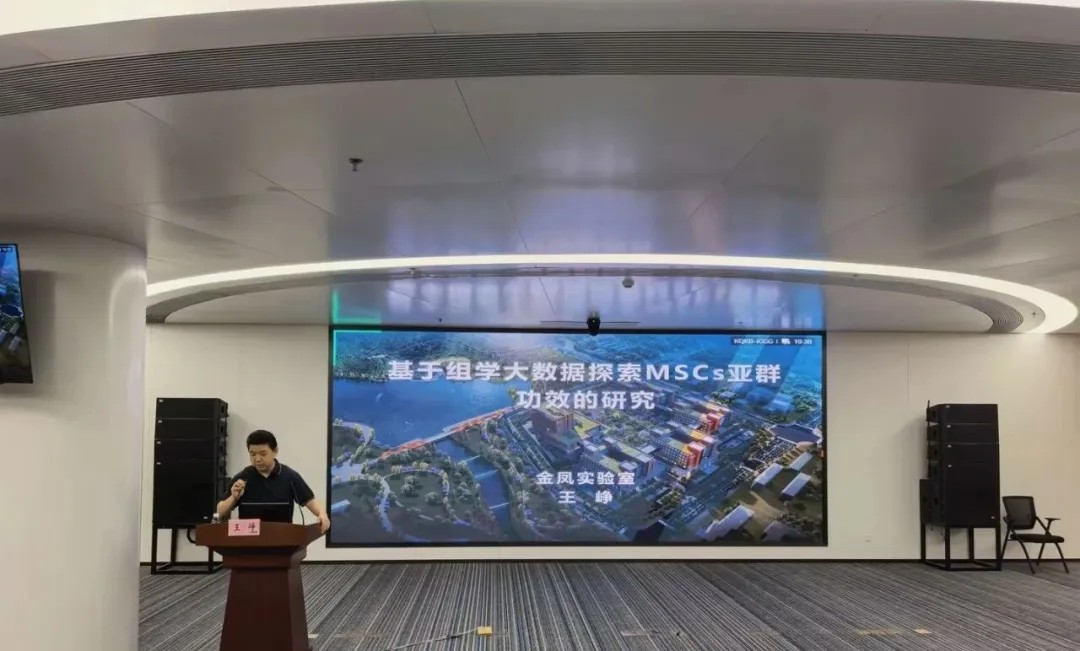
speak Block 3: Exploration of big data based on omics Study on the efficacy of MSCs subpopulations
Introduction to the speaker
Wang Zheng , director/chief scientist of the Interdisciplinary Center of Jinfeng Laboratory, researcher and doctoral supervisor at Xinqiao Hospital of Army Medical University. Director of the National Center for Pathological Phenotyping of Genomic Data Science , Deputy Director of Chongqing Key Laboratory of Blood and Microenvironment 。
Key points of the lecture
Researcher Wang Zheng pointed out in this lecture that mesenchymal stem cells (MSCs) are important seed cells in the fields of regenerative medicine, tissue repair and cell therapy, and have broad clinical application prospects in immune regulation, inflammation control, damage repair, and microenvironment remodeling. Affected by tissue sources, individual donors, cell subpopulations, culture conditions and amplification passages, MSCs are highly heterogeneous, resulting in unstable in vitro preparation quality, function and clinical efficacy, and becoming a key bottleneck for standardized production and large-scale transformation. In the past five years, the team has focused on the heterogeneity and functional quality control of MSCs, integrating single-cell omics, multi-omics, computational biology and artificial intelligence technologies to draw a single cell map of human MSCs, build an exclusive database, analyze the molecular characteristics and lineage relationships of different cell subpopulations, and discover a batch of efficacy-enhancing subpopulations that can achieve immune regulation, tissue repair, and maintain microenvironmental homeostasis. The research further clarifies the relationship between cell phenotype, molecular characteristics and therapeutic efficacy, providing theoretical basis and technical support for establishing an MSCs identification, quality evaluation and potency prediction system and promoting precision, standardization and intelligence in cell preparation.
This lecture focuses on the regulatory system of organoids and organ chips, CGT The three major directions of product single cell rapid sterility testing and mesenchymal stem cell quality control are carried out step by step, from new technology regulatory strategies, cell product quality control technology innovation, to stem cell heterogeneity analysis and multi-omics-AI empowered research paradigms, providing scientific researchers with a systematic reference for regulatory policies, cutting-edge detection technology, multi-omics data mining and cell quality evaluation. Participants said that the lecture directly faced the real pain points in the research and development of cell and regenerative medicine, effectively broadened the research horizons, inspired many ideas, and was very fruitful.


Number
023-68059937
Email:Jinfeng@jflab.ac.cn
Address:
No.313, Bella Road Chongqing High-tech Zone
Postal code: 401329

 渝公网安备50009802002274