
recently, The fifth issue Jinfeng Stem Cell Academic Lecture Successfully held. This issue focused on "Chronic fibrosis mechanism after hematopoietic stem cell transplantation". Professor Song Qingxiao and Dr. Xie Xiaodong from the Second Affiliated Hospital of Army Medical University were specially invited as guest speakers. More than 70 scientific researchers had in-depth exchanges on cutting-edge issues such as cGVHD fibrosis mechanism and hypoxia-immune interaction. The academic atmosphere was strong.
Lecture 1: Hypoxia-driven immune cell-stromal cell interaction promotes skin chronic GVHD fibrosis
Introduction to the speaker
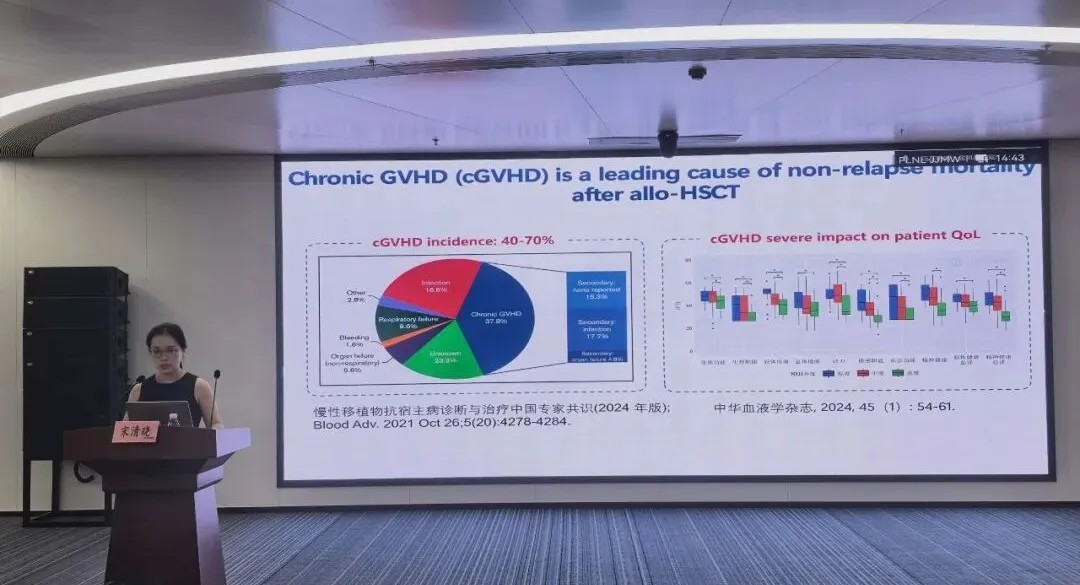
Song Qingxiao, Distinguished professor and researcher at the Second Affiliated Hospital of Army Medical University, selected for the first "New Chongqing" Overseas Talent Introduction Program Innovation Base Project. Long-term research has been conducted on the immune regulation and therapeutic targets of graft-versus-host disease (GVHD) after allogeneic hematopoietic stem cell transplantation.
Key points of the lecture
This lecture focused on cutaneous chronic graft-versus-host disease (cGVHD) fibrosis and introduced the team's latest research published in Science Translational Medicine. The study combined animal models, clinical samples, organoids, and multi-omics technologies to reveal that hypoxia-driven abnormal T cell-macrophage-stromal cell interactions continue to promote inflammation and fibrosis through the HIF-1α-PI3Kδ-IL-13 signaling loop. Targeting HIF-1α, PI3Kδ or IL-13 can effectively reduce cGVHD fibrosis. This study proposes a new mechanism by which "hypoxia-immunity-stroma" jointly drives skin cGVHD fibrosis, providing new ideas for targeted treatment of refractory cGVHD.
speak Block 2: Study on the mechanism of Panax notoginseng total saponins in alleviating chronic GVHD by reversing inflammatory senescence of macrophages
Introduction to the speaker
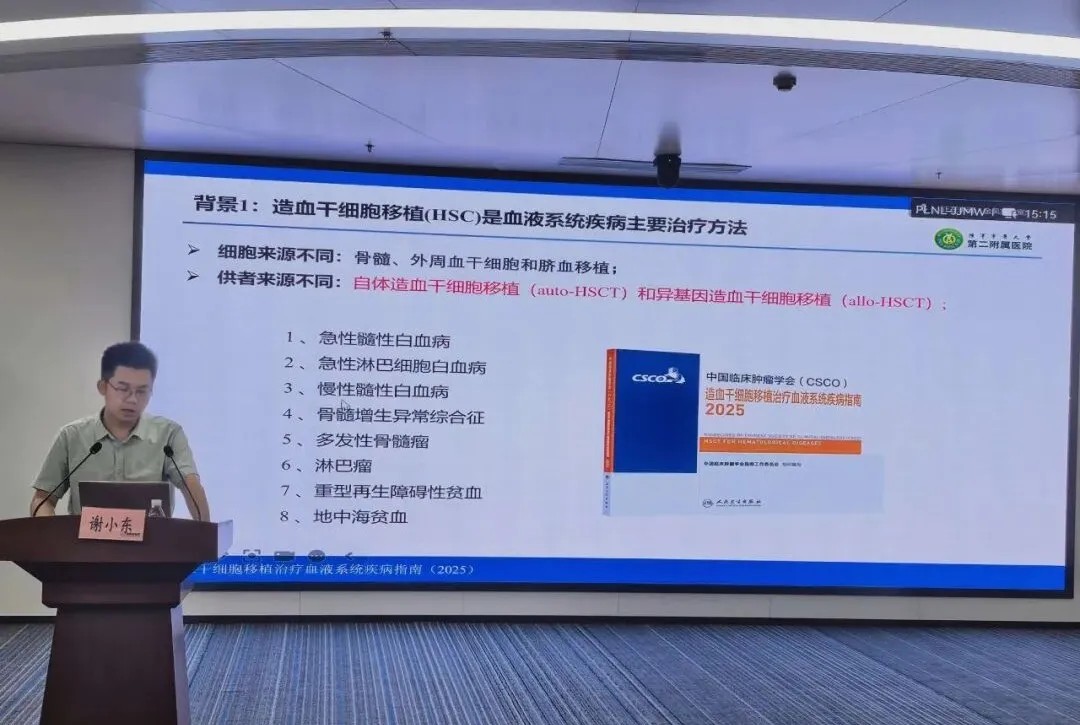
Xie Xiaodong, Postdoctoral fellow at the Hematology Medical Center of the Second Affiliated Hospital of Army Medical University, mainly engaged in research on the pathogenesis of chronic graft-versus-host disease and targeted drugs.
Key points of the lecture
This lecture focuses on the persistence of macrophage inflammatory state and the formation of fibrosis in chronic GVHD. Using single-cell transcriptomics, we found that a population of CSF-1R-low macrophages with persistent type 1 interferon signaling and p21-related senescence characteristics was significantly expanded in cGVHD. Mechanistic studies have shown that IFN-β induces mitochondrial damage and mtDNA release, and maintains the inflammatory senescence state of macrophages through RSAD2–cGAS–STING signaling. Further research found that Panax notoginseng saponins (PNS) can reprogram pathogenic macrophages, restore immune homeostasis and reduce cGVHD inflammation and fibrosis. Research suggests that shifting from "clearance of macrophages" to "reprogramming of pathogenic macrophage states" may provide new strategies for the treatment of cGVHD.
This lecture analyzes the dual pathogenic mechanisms of skin cGVHD fibrosis: hypoxia mediates abnormal immune-stromal cell interactions through the HIF‑1α–PI3Kδ–IL‑13 loop and promotes inflammatory fibrosis.; IFN‑β induces mitochondrial damage through the RSAD2‑cGAS‑STING pathway and maintains macrophage inflammatory senescence. The study proposes targeted signal blocking and Panax notoginseng saponin drug reprogramming strategies, which provide new theoretical and translational ideas for precise treatment of refractory cGVHD, and are of enlightening significance for solving the bottleneck of clinical treatment.


Number
023-68059937
Email:Jinfeng@jflab.ac.cn
Address:
No.313, Bella Road Chongqing High-tech Zone
Postal code: 401329

 渝公网安备50009802002274