
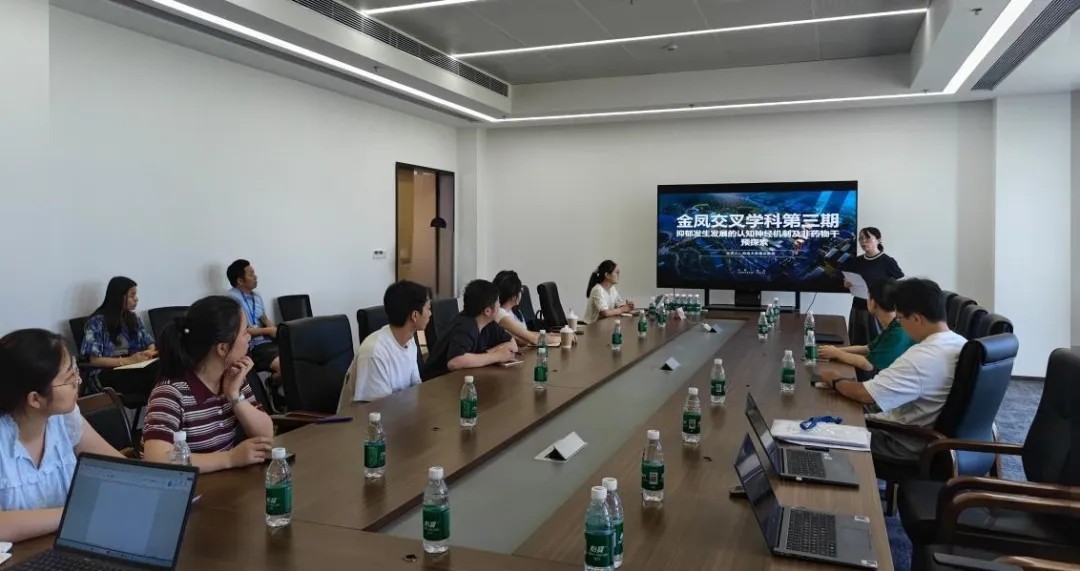
On August 27, 2026, the Jinfeng Interdisciplinary Academic Lecture (the third phase) was successfully held. The theme of this lecture is "Exploration of cognitive neural mechanisms and non-pharmacological intervention in the occurrence and development of depression". It focuses on three aspects: the neural mechanism of negative events affecting the development of depression, the brain mechanism of changes in depression's reward function, and the intervention of anhedonia. Professor Cao Bing from the Department of Psychology of Southwest University was specially invited to give a cutting-edge academic lecture.
Lecture: Exploration of cognitive neural mechanisms and non-drug intervention in the occurrence and development of depression
Introduction to the speaker
Cao Bing , MD, associate professor, master's tutor, Ph.D. graduated from Peking University School of Public Health. He has been to the University of Toronto in Canada and the University of Copenhagen in Denmark to engage in visiting research in the field of mental health and public health. Main research areas are the physiological, psychological and neural mechanisms of mood disorders ; Psychological mechanisms and intervention of psychosomatic diseases ; Obesity metabolic syndrome and cognitive research ; The application of preventive medicine testing in the diagnosis and treatment of affective disorders. He currently presides over a number of national and provincial-level projects such as the National Natural Science Foundation of China, the National Foreign Experts Project, the Humanities and Social Sciences Fund of the Ministry of Education, and the Chongqing Natural Science Foundation. He has published more than 80 papers as the first author or corresponding author in authoritative journals such as Neuroscience & Biobehavioral Reviews and BMC Medicine. 。
Key points of the lecture
Professor Cao Bing systematically elaborated on the cognitive neural mechanisms of depression and non-drug intervention strategies. In terms of the mechanism, childhood trauma and recent negative life events are important risk factors for adolescent depression. Inadequate adaptability and other factors constitute the key mediators connecting negative events and depression. Psychological resilience can weaken the direct and mediating effects of stress transforming into depression, indicating that adolescent depression is the result of the dynamic interaction of stress exposure, vulnerability and protective factors. At the cognitive neural level, the brain reward system plays a central role. Childhood trauma can reshape adolescent reward circuits, and abuse and neglect may create different neural patterns. Research on social reward and food reward paradigms has shown that depressed individuals have reduced reward sensitivity and weakened brain activation during the anticipation and feedback stages. When depression is combined with overweight or obesity, social reward processing impairment is exacerbated, accompanied by abnormal effective connections in areas such as the dorsomedial prefrontal lobe and insula. In terms of intervention, traditional CBT and imagery CBT can significantly reduce the depression level of adolescents with subthreshold depression, but have limited improvement in anhedonia. ; tDCS neuromodulation targeting the dorsomedial prefrontal lobe shows improvement potential.
The lecture integrated the multiple perspectives of psychology, cognitive neuroscience and behavioral medicine, broadened the understanding of the mechanisms of occurrence and development of depression and non-drug intervention strategies, and established a good platform for subsequent interdisciplinary cooperation and topic exchanges. Participants reported that this lecture has both mechanism depth and translational value. From early risk identification to the exploration of intervention targets, it provides new ideas and methods for depression-related research. 。


Number
023-68059937
Email:Jinfeng@jflab.ac.cn
Address:
No.313, Bella Road Chongqing High-tech Zone
Postal code: 401329

 渝公网安备50009802002274