
Recently, the second phase of the Jinfeng Wisdom Pathology Academic Lecture was held The seminar on tumor metabolism and immunity was successfully held. This academic conference focused on tumor metabolism and tumor immunity, and invited Qian Xu, Xu Daqian, Three professors, Du Linyong, served as guest speakers, scientific researchers actively communicated, and the academic atmosphere was warm.
Lecture 1: Regulation of tumor metabolism: from fumarate metabolism to iron homeostasis
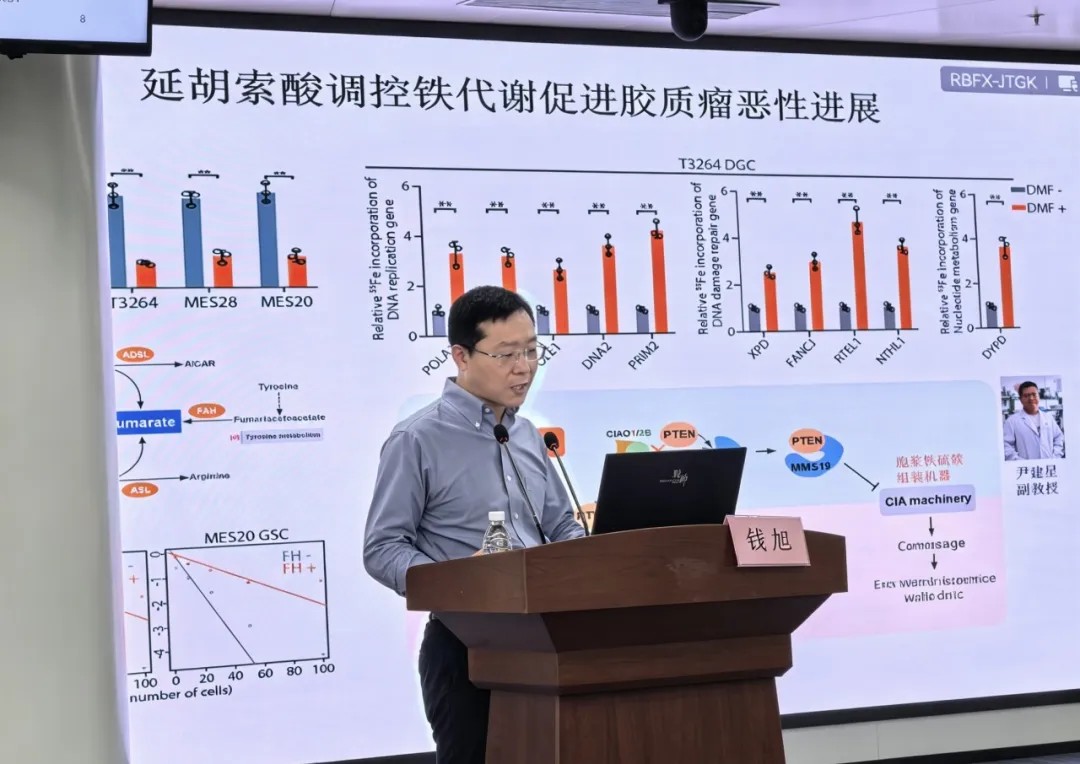
Introduction to the speaker
Qian Xu , National Overseas High-level Young Talent (Youth Thousand Talents), Jiangsu Distinguished Professor, Jiangsu Provincial “Double Entrepreneurship Team” Leading Talent, Director of the Department of Nutrition and Food Hygiene, School of Public Health, Nanjing Medical University, Director (concurrently) of the Scientific Research Sharing Platform, Deputy Director of the Cultivation and Construction Site of the National Key Laboratory of Tumor Biomarkers and Precision Prevention, and serves as the He is a standing member of the Hypoxic Oncology Committee of the Chinese Anti-Cancer Association, a member of the Cell Metabolism Branch of the Chinese Society of Cell Biology, a member of the Neuro-Tumor Branch of the Chinese Society of Neuroscience, a member of the Nutritional Toxicology Branch of the Chinese Nutrition Society, and an executive director of the Jiangsu Provincial Nutrition Society. He is responsible for projects such as the National Natural Science Foundation and the National Health Commission's four major chronic diseases (project leader).
Key points of the lecture
This lecture mentioned that fumaric acid, as an important cancer-promoting metabolite, not only exerts cancer-promoting effects through multiple pathways, but also maintains the stemness of glioma stem cells by regulating iron distribution. In glioblastoma stem cells, the stress granule core protein G3BP1 can be oxidized at specific sites, and then bind and recruit ferritin light chains, sequestering ferritin in stress granules, effectively reducing intracellular free ferrous iron levels, inhibiting ferritin autophagy, and ultimately inhibiting the ferroptosis process, making cancer stem cells resistant to radiotherapy and temozolomide chemotherapy. ; The small molecule compound acanthoside C3 can effectively block the interaction between G3BP1 and ferritin light chain, relieve the inhibitory effect of stress granules on ferroptosis, and restore the sensitivity of glioblastoma stem cells to radiotherapy and chemotherapy. This study clarifies a new mechanism by which stress granules negatively regulate ferroptosis and mediate tumor treatment resistance, providing a novel theoretical basis and treatment direction for targeted combination therapy of glioblastoma and other malignant tumors.
Lecture 2: Spatiotemporal heterogeneity of tumor metabolism
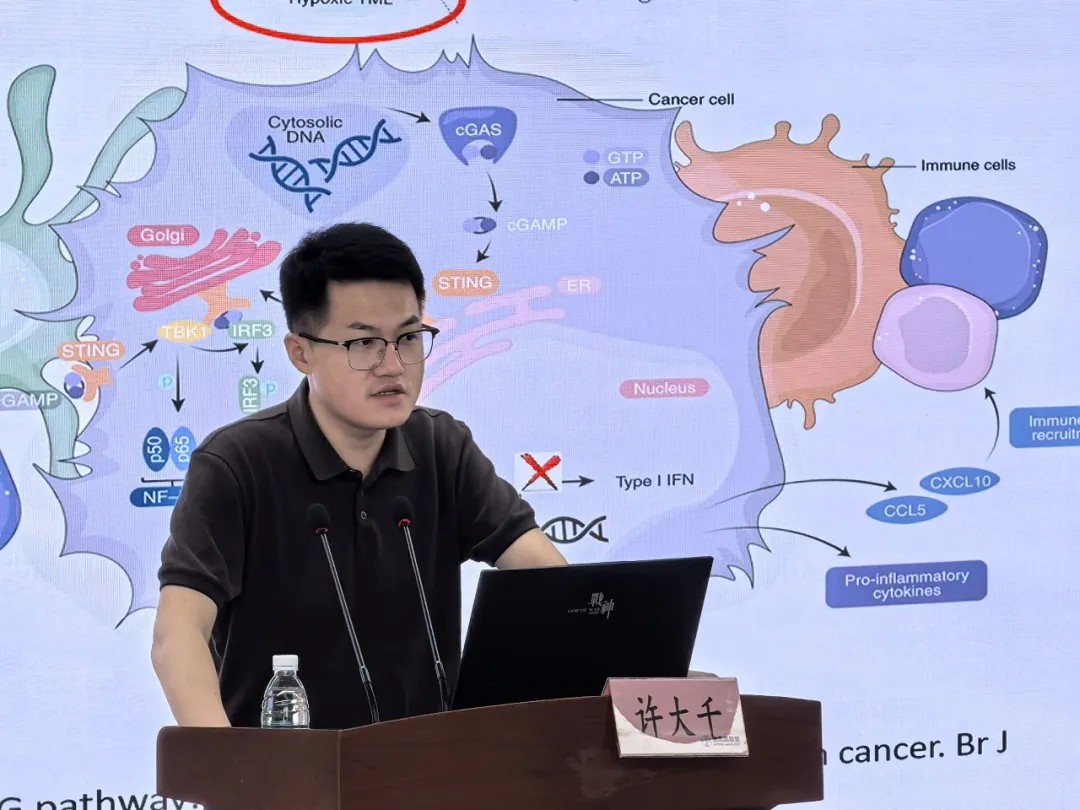
Introduction to the speaker
Xu Daqian , Qiushi Distinguished Professor of Zhejiang University, permanent full professor of the School of Medicine, doctoral supervisor, winner of the National Natural Science Foundation of China (formerly the National Distinguished Young Scholars), overseas outstanding youth project, chief scientist of the Youth Project of the National Key R&D Program, core member of the leading innovation and entrepreneurship basic research team in Zhejiang Province, has long been committed to tumor metabolism research, and has published many papers as the corresponding author (including co-author) in well-known academic journals such as Nature, Nature Cell Biology, Nature Metabolism, Nature Chemical Biology, Journal of Experimental Medicine, PNAS. Won the Huaxia Youth Medical Science and Technology Award, the Young Scientist Award of the Chinese Anti-Cancer Association, the Young Scholar Award of the Chinese Society of Immunology, the First Prize of Zhejiang Natural Science Award, and the China Industry-Academic-Research Collaboration Innovation Individual Award. ; As the project leader, he presides over the National Key R&D Program Youth Project, National Natural Science Foundation Youth A, Regional Joint Key, Major Research Plan Cultivation, General (X2) Project, Zhejiang Provincial Natural Science Foundation Outstanding Youth, Major Project, etc. He serves as an editorial board member of BMC Biology and Science Bulletin magazines, a member of the Tumor Cell Biology Branch of the Chinese Society of Cell Biology, and a member of the Tumor Rhythm and Hypoxic Oncology Committee of the Chinese Anti-Cancer Association.
Key points of the lecture
This lecture focused on the common problem of resistance to neoadjuvant chemotherapy in pancreatic ductal adenocarcinoma, and explored its metabolic resistance mechanism and new treatment strategies. Studies have confirmed that the valine metabolic enzyme MMSDH is a key driver of gemcitabine resistance in pancreatic ductal adenocarcinoma. Under hypoxic conditions, GCN5 can mediate the lactylation of MMSDH at the K113 site. The modified MMSDH will promote the generation of propionyl-CoA, thereby inducing KAT8 to mediate the propionylation of ACSL4 at the K606 site. ; This modification can enhance the binding of ACSL4 and HSC70, degrade ACSL4 through the autophagy pathway mediated by molecular chaperones, inhibit ferroptosis of tumor cells, and ultimately cause chemotherapy resistance. Clinical samples have also confirmed that low expression of ACSL4 caused by this pathway is closely related to poor prognosis of pancreatic ductal adenocarcinoma chemotherapy. In addition, studies have found that restricting valine intake through diet or blocking the lactylation of MMSDH at the K113 site can reverse this drug resistance pathway, restore gemcitabine-induced ferroptosis of tumor cells, and effectively inhibit tumor progression. This study completely elucidates a new mechanism by which pancreatic ductal adenocarcinoma escapes ferroptosis and develops chemotherapy resistance through valine metabolism, and confirms that the GCN5–MMSDH–ACSL4 axis is a highly potential target pathway for improving chemotherapy resistance and improving treatment efficacy in pancreatic ductal adenocarcinoma.
Lecture 3: Tumor immune escape and tumor immunotherapy
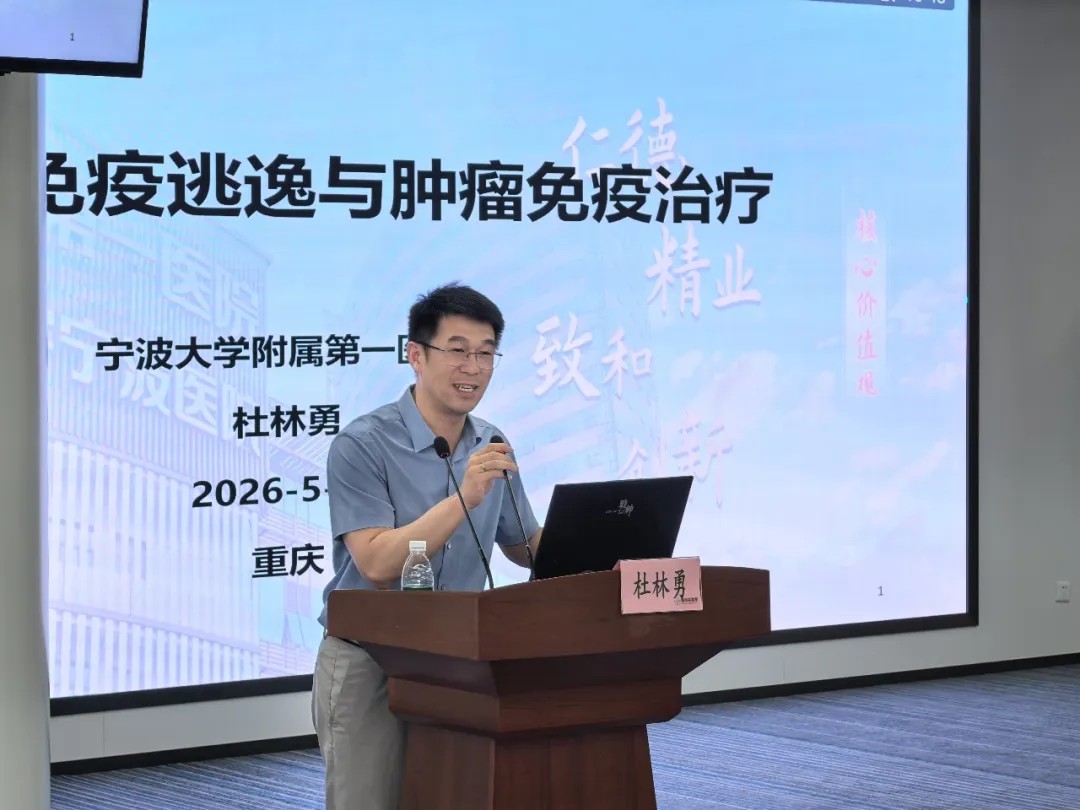
Introduction to the speaker
Du Linyong , doctoral supervisor, selected as a leading talent in colleges and universities in Zhejiang Province. He graduated from the University of Electronic Science and Technology of China with his Ph.D. and completed postdoctoral research at MD Anderson Cancer Center in the United States. He is mainly engaged in research on tumor molecular diagnosis and tumor immunotherapy. In the past five years, he has hosted 4 scientific research projects at the provincial and ministerial levels, including 2 from the National Natural Science Foundation of China. He has published more than a dozen SCI papers as the first author or corresponding author, including in J Exp Med, Cell Death & Dis, Small, Theranostics and Adv. He has published research papers in many top journals such as Sci. He is a member of the China Precision Testing Committee for Clinical Microbiology and Infection and a member of the Zhejiang Provincial Precision Testing Committee.
Key points of the lecture
This lecture mainly introduces the classification characteristics of glioblastoma (GBM), the status of current immunotherapy and the key immune escape regulatory mechanisms. GBM is the most common intracranial malignant primary brain tumor, which is mainly divided into two categories: IDH mutation (secondary), which accounts for about 10%, and is often accompanied by ATRX and TP53 mutations. ; And IDH wild type (primary), which accounts for 90%, often has EGFR amplification/EGFRvIII mutation, TERT promoter mutation, and PTEN deletion. The overall prognosis of standard treatment is poor. At present, the efficacy of immunotherapy for GBM varies significantly: EGFRvIII vaccine, DC vaccine, oncolytic virus and some targeted combination immune regimens have shown good efficacy, but single-agent PD-1/PD-L1 and CTLA-4 antibodies are only effective for a small number of patients with MSI-high and POLE mutations. Multi-target targeted therapy can also easily lead to recurrence due to high tumor heterogeneity and antigen loss. At the mechanism level, GBM has multiple key immune evasion pathways: Abnormally activated β-catenin can upregulate PD-L1 expression, which is mediated by Wnt3A, EGFR-AKT/β-catenin pathway and TCF/LEF elements, promoting tumor immune evasion. MK2206 combined with PD-1 antibody can effectively inhibit the progression of glioma. ; In addition, the EGFR/c-Src/CD47 axis also mediates GBM immune escape. EGFR activation can upregulate CD47 expression. TRIM21 regulates CD47 ubiquitination. Targeted blocking or degradation of CD47 can significantly enhance the anti-tumor effect of EGFR inhibitors, providing an important target and theoretical basis for combined immunotherapy of GBM.
This lecture focused on exchanges on a number of cutting-edge cancer research directions, deepened the study of tumor metabolic immune mechanisms, and promoted the implementation of precision tumor treatment, which is of great significance to the development of tumor diagnosis, treatment and biotechnology.


Number
023-68059937
Email:Jinfeng@jflab.ac.cn
Address:
No.313, Bella Road Chongqing High-tech Zone
Postal code: 401329

 渝公网安备50009802002274