
On May 20, 2026, the second phase of the Jinfeng Stem Cell Academic Lecture was successfully held. This conference focused on "Research on Quality Control of Cell Products", "Evaluation of Organoid Construction" and "Application of Flow Cytometry". Professors Rao Chunming, Li Dongwei and Wang Hongyu were specially invited to serve as guest speakers. More than 80 scientific researchers attended the meeting, and the discussion was lively.
Lecture 1: Biomedical new technology cell product quality control research and testing laboratory construction
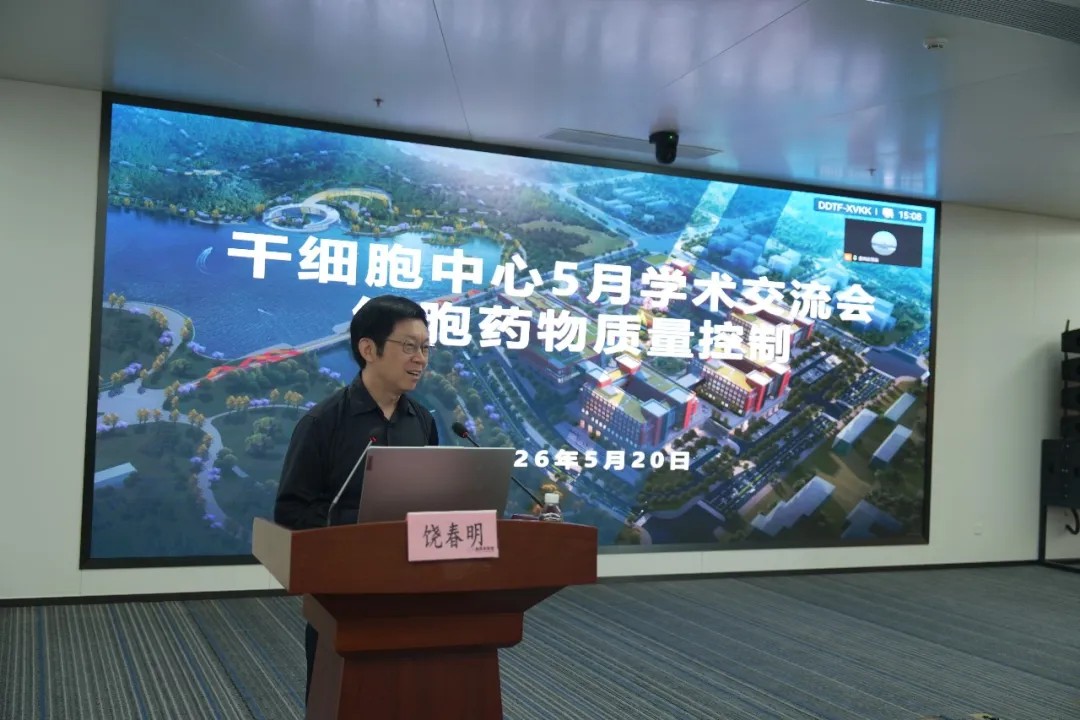
Introduction to the speaker
Rao Chunming, He has been involved in biotechnology product quality research since 1983. He has successively served as director and second-level researcher of the Recombinant Drugs Office of the China Institute for Food and Drug Control, and is currently the chief scientist of Beijing Zhaoyan Drug Testing.
Key points of the lecture
This lecture focuses on the "Regulations on the Administration of Clinical Research and Clinical Transformation Application of New Biomedical Technologies" which will be officially implemented on May 1, 2026, and comprehensively explains the regulatory system, quality standards, testing and verification methods and laboratory specification construction related to the quality control of cell products. The lecture mentioned that stem cell products have special characteristics such as differentiated sources, living drug properties, and inability to be terminally sterilized, and the quality control standards are strict. Focus on interpreting the 2025 version of the three volumes of the "Pharmacopoeia of the People's Republic of China" and the "Technical Guiding Principles for Pharmaceutical Research and Evaluation of Human Stem Cell Products" to clarify core quality assessment elements such as cell identification, activity potency, purity indicators, tumor risk, and microbial safety. At the laboratory construction level, it focuses on the functional partitioning of P2 clean laboratories and the key points of air pressure differential control. It also explains the requirements for building a CNAS quality management system, covering the establishment of a four-level document system, professional personnel training, and internal and external quality control.
Lecture 2: Application of flow cytometry in quality control of cell products
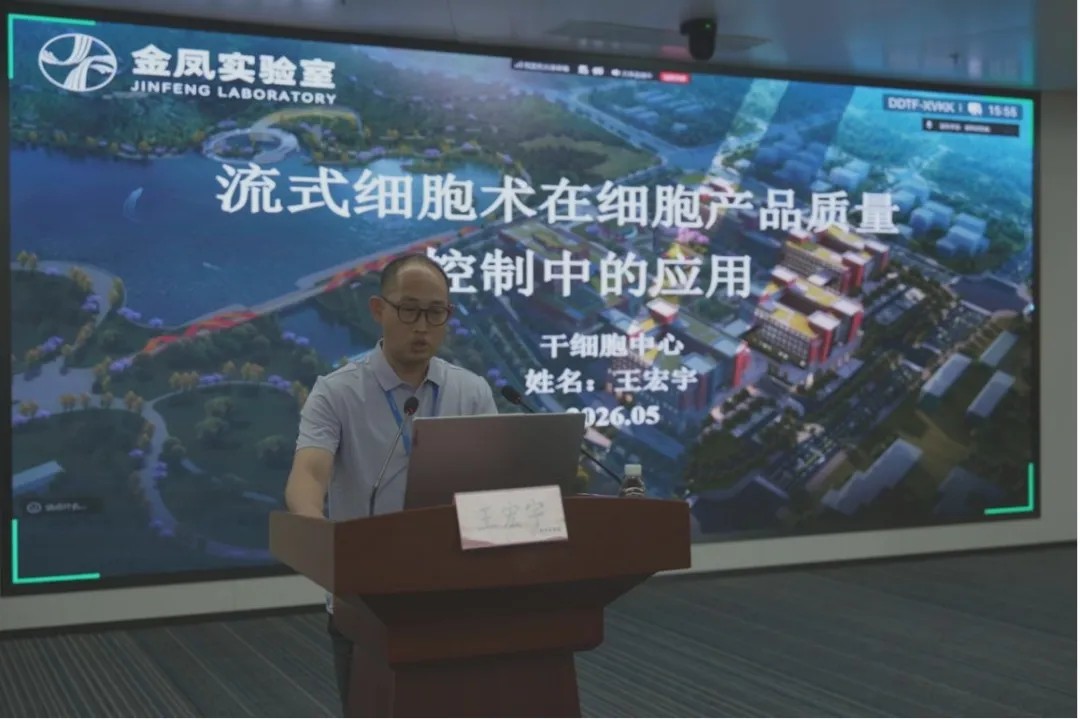
Introduction to the speaker
Wang Hongyu , QC supervisor of the Stem Cell Center of Jinfeng Laboratory. He has been deeply involved in the field of cell therapy for many years, focusing on the quality research and quality control of cell therapy products such as stem cells (MSC) and immune cells (CAR-T, TCR-T, TIL, NK).
Key points of the lecture
The lecture systematically introduced the application of flow cytometry in the whole life cycle quality control of cell therapy products, following the concept of "Quality by Design (QbD)", covering key aspects such as cell bank/cell matrix quality control, raw materials (such as viral vector titer testing), process control (transduction efficiency, cell subtype changes), finished product release testing (purity, biological efficacy), stability research and clinical immune monitoring. Taking the development of the CAR-T cell proportion method as an example, the entire process of detection reagent screening (Protein-L, G4S, recombinant antigen-Fc, anti-idiotypic antibodies, etc.), antibody titration, compensation adjustment, gating strategy, control settings (FMO control, isotype control) and methodological verification (referring to ICH Q2 and Chinese Pharmacopoeia 9101 guidelines) was demonstrated in detail. At the same time, he looked forward to the potential of new technologies such as mass spectrometry and spectral flow cytometry in ultra-high parameter analysis, and pointed out the core challenge facing the current field - the lack of standards (specific target antibodies, universal calibration microspheres, functional detection standards), and called on the industry and regulatory agencies to jointly promote the construction of a standard system.
Lecture 3: Organoid Culture and Solutions
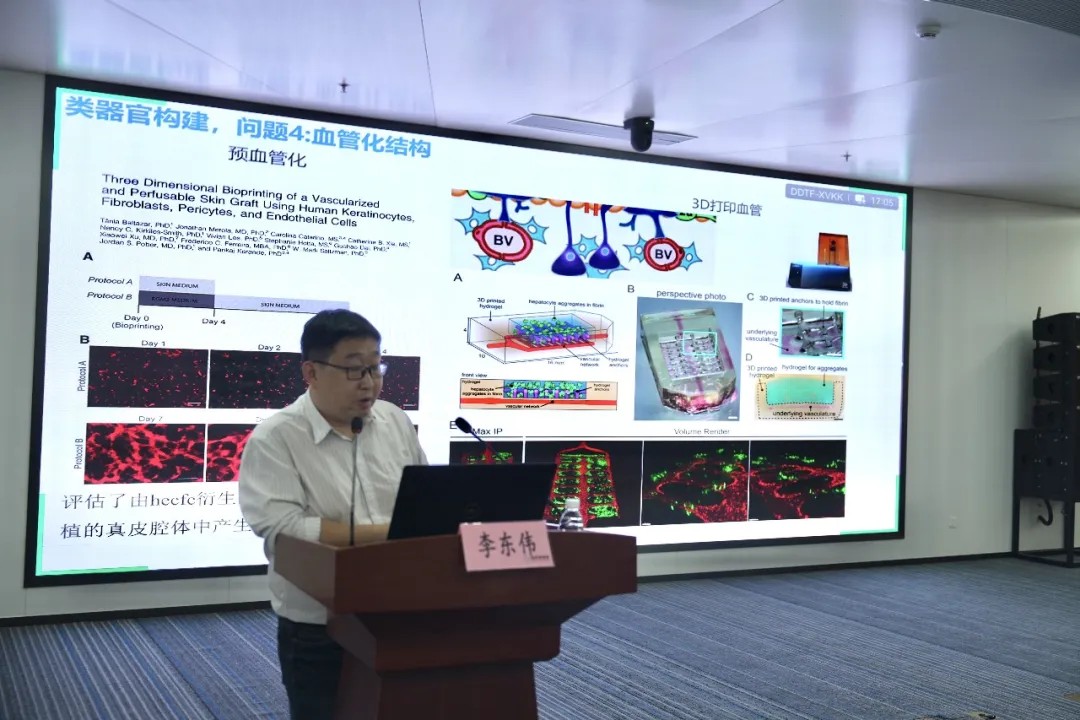
Introduction to the speaker
Li Dongwei , Master, graduated from Harbin Veterinary Research Institute, and currently serves as the general manager of Guangzhou Savive Life Technology Co., Ltd. He has been deeply involved in the fields of life science instruments, 3D bioprinting and organoid microphysiological systems (MPS) for many years, and has profound technology accumulation and project implementation experience in the construction of automated organoid culture systems, high-throughput construction and standardized culture.
Key points of the lecture
The lecture directly addressed the four major pain points of organoid construction - "failure to grow large, unstable growth, insufficient personalization, and inaccurate evaluation." It was also pointed out that static culture leads to central necrosis, and a dynamic culture system is recommended. ; In view of the single cell type, the co-culture strategy of oligodendrocytes, microglia, vascular endothelial cells and brain organoids is introduced. It focused on the application of 3D bioprinting technology (extrusion + DLP) in accurately arranging cells and constructing vascularized tissues. At the functional assessment level, the emphasis is on expanding from morphology to multi-dimensional assessment such as multi-omics, electrophysiology (high-density microelectrode array), mechanics and in vivo transplantation functional verification.
This meeting effectively enhanced the center’s professional understanding in the fields of cell product quality control and cutting-edge model construction, and laid a solid foundation for the clinical transformation of related technologies.


Number
023-68059937
Email:Jinfeng@jflab.ac.cn
Address:
No.313, Bella Road Chongqing High-tech Zone
Postal code: 401329

 渝公网安备50009802002274