
On the afternoon of May 21, 2026, the third phase of the Jinfeng Wisdom Pathology Academic Lecture Series and Disease Diagnosis and Treatment Seminar was successfully held. This conference focused on the two major themes of pathological analysis of cell chemical signals and targeted therapy with antibacterial vesicle materials. Zang Guangchao, associate professor of Chongqing Medical University, and Yang Jiaojiao, associate researcher of Sichuan Stomatological Hospital, were specially invited to give on-site lectures. The atmosphere of exchange and discussion among the participants was lively, and everyone expressed that they had gained a lot after the meeting.
Lecture 1: Application research on spatiotemporal analysis of cell chemical signals and analysis of pathophysiological mechanisms
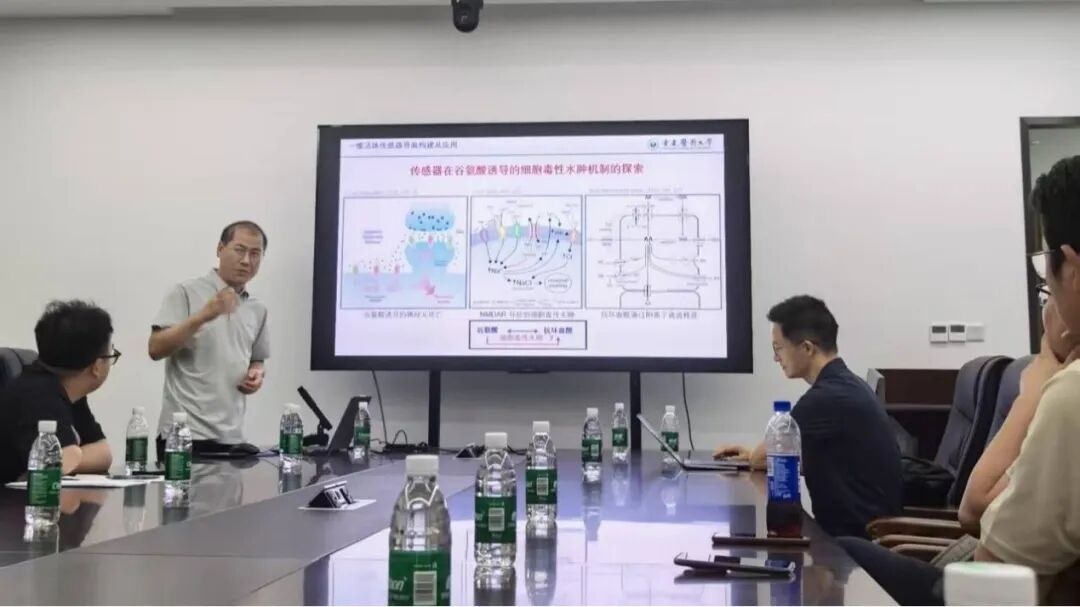
Introduction to the speaker
Zang Guangchao , PhD, master's tutor, deputy director of Experimental Teaching Management Center of Chongqing Medical University; Associate Professor of Chongqing Medical University, Professor of the Second Clinical College of Chongqing Medical University (double appointment) ; Vice chairman of Chongqing Synthetic Biology Society, director of Chongqing Cognition Society, member of the Medical Device Professional Standing Committee of Chongqing Pharmaceutical Society, and IMed youth editorial board member.
Key points of the lecture
This lecture focuses on the dynamic changes in biological signals such as reactive oxygen species and neurotransmitters in the organ microenvironment, and explores their intrinsic relationship with disease progression, drug efficacy evaluation, and the development of bionic organ chips. Taking the brain, liver, intestinal tract, and tumors as research objects, we will build an electrochemical sensing interface that is both sensitive, anti-interference, and flexible for pathological scenarios such as brain cell damage, neuroinflammation, and tumor oxidative imbalance. We will summarize the design ideas and technical paths for in-situ real-time dynamic detection of key signals in multi-organ microenvironments, and explore the application prospects of its integration with organ chips. This will provide technical reference for disease mechanism analysis, drug screening, and construction of smart organ chip systems. 。
Lecture 2: Specific antibacterial vesicle materials
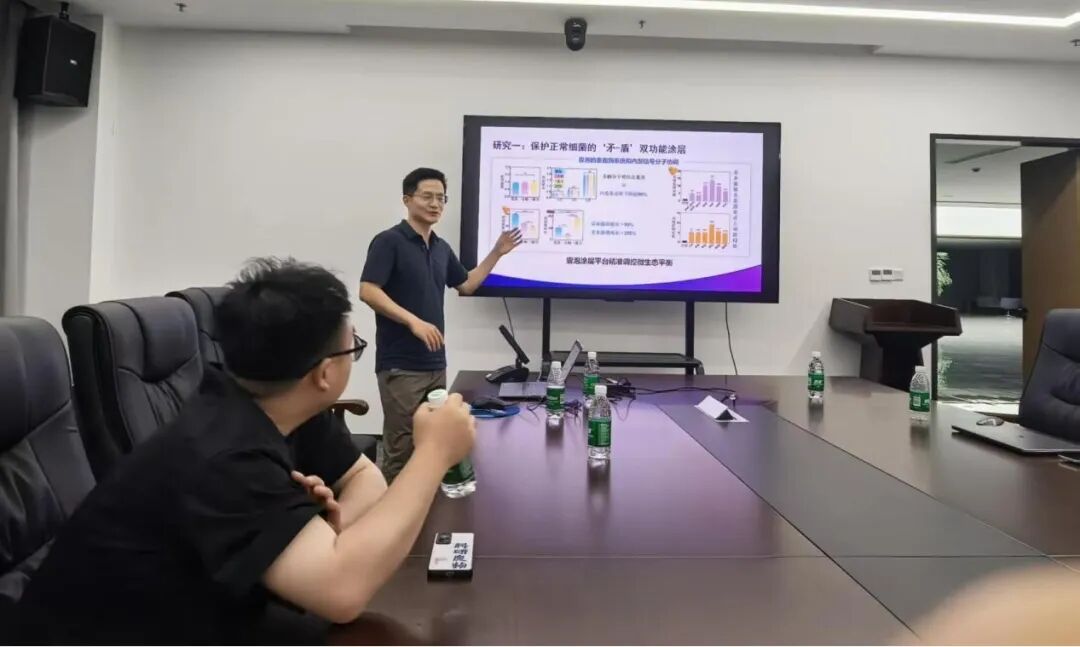
Introduction to the speaker
Yang Jiaojiao , associate researcher at West China Stomatological Hospital/National Key Laboratory of Oral Disease Prevention and Treatment. Bachelor's and Master's degrees from Sichuan University, Ph.D. from Uppsala University. He concurrently serves as a standing committee member or committee member of the Oral Materials Committee of the Sichuan Stomatological Association and other societies, and a youth editorial board member of magazines such as "Exploration" and "Nano TransMed". The main research directions are vesicle antibacterial materials and underwater adhesives.
Key points of the lecture
This lecture focused on the problem of clinical bacterial infection and pointed out that traditional antibacterial methods have problems such as serious side effects and increased bacterial resistance, and there is an urgent need for new specific antibacterial materials. Focusing on the design of response to the infection microenvironment, this paper introduces the construction strategy of specific antibacterial vesicles targeting pathogenic bacteria, achieving precise antibacterialism and protecting beneficial bacteria through surface modification. ; Functional vesicle systems such as photodynamic and drug-loaded sustained-release systems were shared, their advantages such as biocompatibility and long-lasting antibacterial properties were analyzed, and their application potential and clinical translation bottlenecks in scenarios such as oral cavity and implant infections were discussed.
During the interactive communication session, participants actively asked questions and had in-depth exchanges on key issues such as cell chemical signal analysis, pathological mechanism exploration, smart organ chip construction, and antibacterial vesicle targeted screening. The participating experts gave detailed answers one by one, and the atmosphere of the on-site discussion was strong and lively. This academic exchange effectively promoted the collision of ideas and exchange of experiences among various teams, empowering and increasing efficiency for the center's subsequent clinical translational research.


Number
023-68059937
Email:Jinfeng@jflab.ac.cn
Address:
No.313, Bella Road Chongqing High-tech Zone
Postal code: 401329

 渝公网安备50009802002274