
Lecture time
2026 May 20 (Wednesday) 15:00-17:00Lecture location
Conference Room 302, Building 1, Jinfeng Laboratory
Lecture Topic 1: Quality Control Research and Testing Laboratory Construction of New Biomedical Cell Products
Introduction to the speaker

Rao Chunming , has been involved in biotechnology product quality research since 1983. He has served as director and second-level researcher of the Recombinant Drugs Office of the China Institute for Food and Drug Control, and is currently the chief scientist of Beijing Zhaoyan Drug Testing; He concurrently serves as a committee member of the 8th-11th National Pharmacopoeia. He presided over more than 20 national projects from the Seventh Five-Year Plan to the Fourteenth Five-Year Plan, established a quality control technology platform for recombinant drugs, and the results were included in the Chinese Pharmacopoeia. Won the second prize of the National Science and Technology Progress Award and the State Council Special Government Allowance as an expert. He has completed more than 7,000 batches of inspections, published 287 papers and 14 patents, and has effectively promoted the industrialization of biopharmaceuticals in my country. 。
Lecture Introduction
Article 9 of the "Regulations on the Administration of Clinical Research and Clinical Transformation Application of New Biomedical Technologies" stipulates: Before conducting clinical research on new biomedical technologies, non-clinical research such as laboratory research and animal experiments must be carried out in accordance with the law.; Clinical research can only be carried out after non-clinical research proves that the technology is safe and effective. This lecture mainly takes stem cell products as an example to introduce the characteristics and quality control points of cell therapy products, relevant domestic and foreign regulatory requirements, the formulation of quality standards, the establishment and verification of calibration methods, the standardized construction of testing laboratories and the establishment of quality systems. In order to ensure product safety and effectiveness, promote clinical research and clinical transformation of new biomedical technologies, it provides quality standards and testing technology references.
Lecture topic 2: Application of flow cytometry in quality control of cell products
Introduction to the speaker
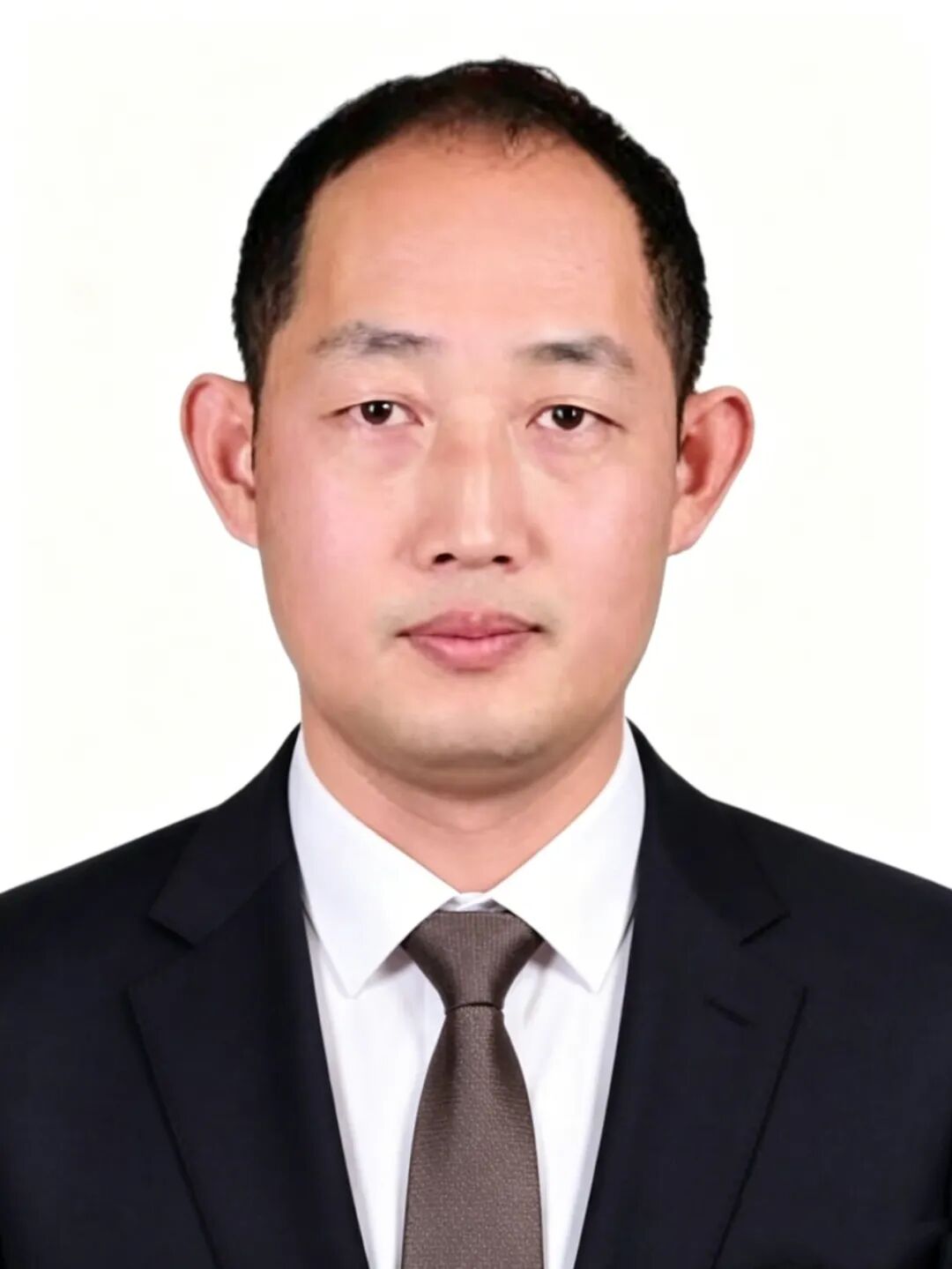
Wang Hongyu , QC supervisor of the Stem Cell Center of Jinfeng Laboratory. He has been deeply involved in the field of cell therapy for many years, focusing on quality research and quality control of cell therapy products such as stem cells (MSC), immune cells (CAR-T, TCR-T, TIL, NK). He is proficient in the establishment of quality standards for cell therapy products, development and verification of detection methods, product release and stability research, and is deeply involved in multiple IND registration applications for cell therapy products. He is familiar with regulations and policies, writing registration materials, compliance and review communication points, and has rich experience in cell therapy product quality evaluation and project application.
speak seat slip between
Flow cytometry is the core detection technology in the field of cell biomedicine. It can achieve multi-parameter rapid qualitative and quantitative analysis of single cell samples, and accurately identify cell phenotypes, differentiation stages, cell activity, product purity, functional subgroups and the proportion of miscellaneous cells. It has high throughput, high sensitivity and good repeatability, and has become an indispensable core detection method in the quality evaluation system of cell therapy products. Currently, the research and development and industrialization process of immune cell and stem cell therapy products are accelerating, and the requirements for full-process quality control and compliance review continue to become stricter. This report relies on the current technical guidance principles related to cell products to interpret the standardized application of flow cytometry from the perspective of regulatory compliance. Focusing on cell-based products, we elaborate on their practical applications in the core links of the entire chain, including quality control of starting cell matrices and key raw materials and excipients, production process control, and final product release testing, providing a reference for the development of cell therapy products and the establishment of a quality control system.
Lecture topic three: Organoid Culture and Solutions
Introduction to the speaker

Li Dongwei , Master, graduated from Harbin Veterinary Research Institute, and currently serves as the general manager of Guangzhou Savive Life Technology Co., Ltd. He has been deeply involved in the fields of life science instruments, 3D bioprinting and organoid microphysiological systems (MPS) for many years, and has profound technology accumulation and project implementation experience in the construction of automated organoid culture systems, high-throughput construction and standardized culture. He is proficient in 3D bioprinting technology, automated/microgravity organoid culture systems, and 3Brain high-density MEA electrophysiological analysis. He is proficient in the key technologies of the entire process of organoids from automated construction, large-scale culture, functional maturation to multi-dimensional verification. He is especially good at solving industry pain points such as poor consistency, low efficiency, and difficulty in standardization of organoid culture.
speak seat slip between
This lecture will focus on 3D organoids from three levels: concept, application and solution. First, we introduce the definition of organoids and their construction principles, and explain why researchers switch from traditional 2D models to 3D culture. ; Secondly, we will demonstrate the key applications of organoids in the fields of disease modeling, drug screening, and regenerative medicine. ; Finally, the research process, common identification methods and standardized 3D culture protocols of organoids were systematically reviewed to provide practical technical guidance for scientific researchers.
Everyone is welcome to actively participate


Number
023-68059937
Email:Jinfeng@jflab.ac.cn
Address:
No.313, Bella Road Chongqing High-tech Zone
Postal code: 401329

 渝公网安备50009802002274