
Lecture review
Research on the significance and mechanism of bone cell network reconstruction strategy in bone defect repair and treatment
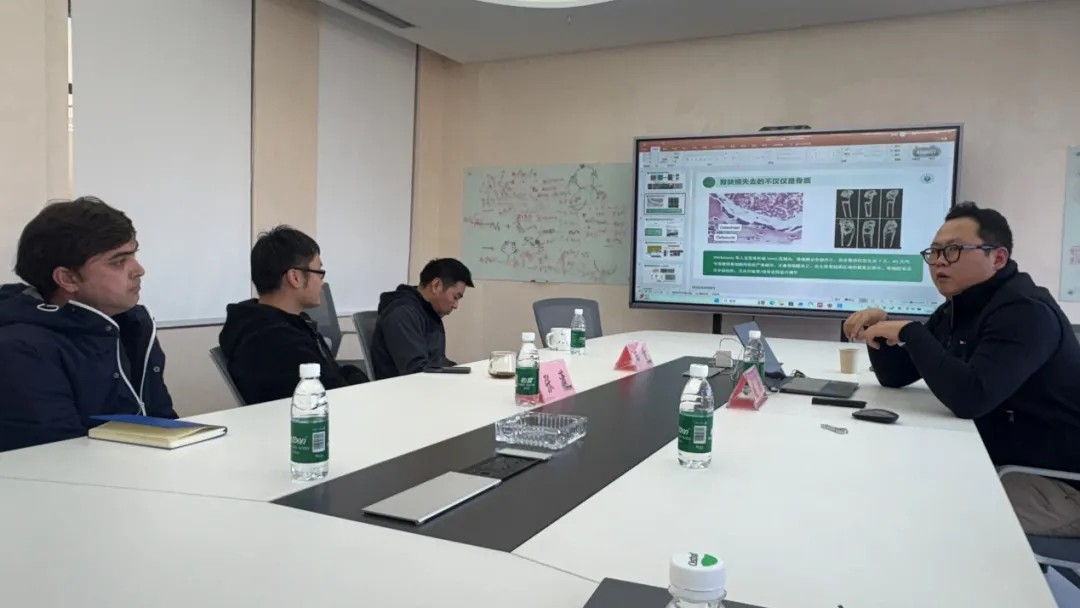
Introduction to the speaker
Zhao Chen, MD, is the deputy chief physician of the Joint Surgery Department of the First Affiliated Hospital of Chongqing Medical University, a scholar studying in the United States, a member of the Shoulder and Elbow Sports Medicine Training Chongqing Center of the Chinese Medical Education Association, a member of the Innovation and Transformation Group of the Orthopedics Branch of the Chongqing Medical Doctor Association, a special commissioner of science and technology in Chongqing, and an outstanding young talent of the First Affiliated Hospital of Chongqing Medical University. In recent years, he has published 13 SCI papers in Bone Research, Journal of Controlled Release, ACS Applied Materials & Interfaces, Stem Cell Research & Therapy and other journals, won 1 National Natural Science Foundation Youth Project, participated in 2 Natural Science Foundation General Projects, won 1 Chongqing Education Commission Project, and 1 National Postdoctoral Fellowship.
Main content
The lecture systematically reviewed the central role of osteocytes in the bone regeneration process, especially their cutting-edge discoveries in guiding "effective vascularization". For a long time, bone repair research has focused on osteoblasts and osteoclasts, but this content reveals that osteocytes serve as the "command center" buried in the bone matrix and actively regulate angiogenesis through complex signaling networks, providing a new idea for breaking through the bottleneck of repairing large bone defects. The lecture focused on explaining the three major mechanisms by which bone cells regulate angiogenesis. First, osteocytes recruit vascular endothelial cells by secreting key factors such as VEGF, laying the foundation for the growth of new blood vessels. This process is an indispensable step in initiating bone repair. Secondly, the unique dendritic processes of bone cells form a three-dimensional signal relay network, which regulates angiogenesis spatiotemporally through pathways such as Notch, ensuring that blood vessels grow into the repair area at the appropriate time and direction, achieving "precise navigation." Finally, the lecture further proposed the innovative concept of "osteocyte-vascular unit", emphasizing that the two do not act independently, but are closely coupled in anatomy and function, and work together to promote bone tissue regeneration with biomechanical functions. The lecture not only deepened the understanding of the biological functions of bone cells, but also closely integrated basic research with clinical translation, laying a solid theoretical foundation for the development of new bone regeneration strategies targeting bone cell-blood vessel interactions.


Number
023-68059937
Email:Jinfeng@jflab.ac.cn
Address:
No.313, Bella Road Chongqing High-tech Zone
Postal code: 401329

 渝公网安备50009802002274