
From November 13th to 14th, 2025, the first Sino-French Neuro-Oncology Symposium was successfully held at the Chongqing Shancheng International Conference Center. This conference was hosted by Jinfeng Laboratory under the guidance of Chongqing Municipal Science and Technology Bureau. It attracted more than 200 top scholars and clinical experts from China and France in the fields of neurosurgery, oncology, neuropathology and basic research. Professor Bian Xiuwu, academician of the Chinese Academy of Sciences and chairman of the conference, delivered a welcome speech online ; Pu Ji, member of the Party Committee and Deputy Director of Chongqing Municipal Science and Technology Bureau, and Professor Jean-Philippe Hugnot, chairman of the conference, attended the opening ceremony and delivered speeches.
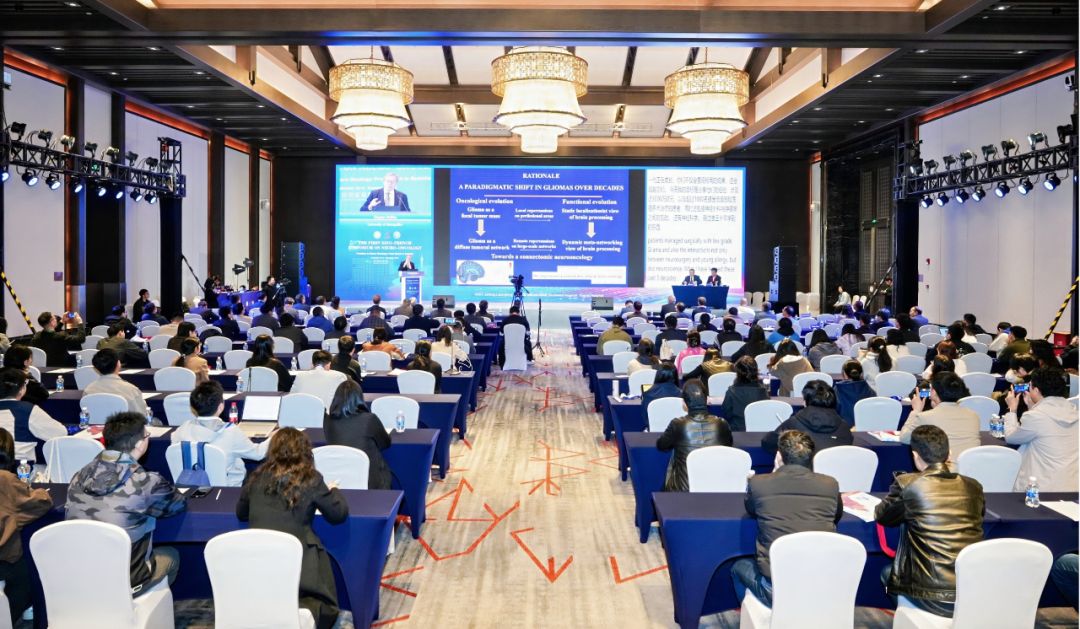
The academic report of the conference has two major sections: "Clinical Session" and "Basic Research Session". Experts participating in the conference had in-depth exchanges on hot issues in the field of intelligent diagnosis and treatment of brain glioma.
At the clinical session, world-renowned neurosurgery expert and Professor Hugues Duffau of the University of Montpellier, France, shared his 28 years of experience in connectome-based glioma surgery, triggering participants’ in-depth thinking on long-term survival strategies to preserve patients’ quality of life.; Professor Wang Yinyan from Beijing Tiantan Hospital of Capital Medical University demonstrated the technological innovation results in the treatment of brain glioma, providing a new way to improve the accuracy of diagnosis and treatment. ; Professor Luc Taillandier from the University of Nancy I in France shared the medical treatment ideas for diffuse low-grade glioma from the perspectives of personalization, functionality, and long-term development. ; Professor Hua Wei from Huashan Hospital Affiliated to Fudan University focused on the clinical translation of glioma metabolism and discussed the full-process application plan from diagnosis to treatment. In addition, Professor Guillaume Herbet of the University of Montpellier in France analyzed the adaptation and remodeling mechanisms of the brain around low-grade glioma and neuroplasticity, and Professor Julien Boetto shared his experience in the patient-centered clinical research translation project of meningioma. ; Professor Zhang Nu from the First Affiliated Hospital of Sun Yat-sen University brought cutting-edge research results on the "pan-cancer brain metastasis map at the single cell level".
In the basic research session, Professor Thomas Daubon from the French National Center for Scientific Research (CNRS) revealed the metabolic adaptation mechanism of primary and recurrent glioblastoma, and Professor Thierry Virolle brought a case of translational research on the characteristics of glioblastoma stem cells, providing new directions for targeted therapy.; Professor Liu Chong from Zhejiang University provided an in-depth analysis of the cell plasticity mechanism in the occurrence of glioma. ; Professor Jean-Philippe Hugnot from the University of Montpellier in France focused on the molecular regulatory mechanisms of proliferation and plasticity of diffuse glioma, and introduced the development and application of new related research tools.
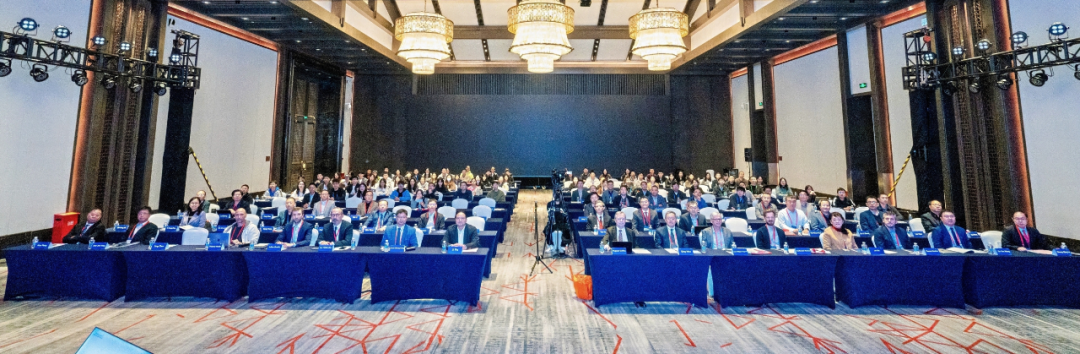
In addition to special reports, the conference also set up two roundtable discussions centered on "Clinical Management of Brain Tumors" and "Opportunities for Sino-French Neuro-Oncology Cooperation". The participating experts also visited the Jinfeng Laboratory to jointly promote the extension of academic exchanges to substantive cooperation.
As a high-level academic conference between China and France in the field of neuro-oncology, this conference systematically showcases the latest achievements of the two countries in basic research, clinical diagnosis and treatment, and translational applications. It responds to core challenges such as complex pathologies, high technical thresholds, and urgent needs for multidisciplinary collaboration in the diagnosis and treatment of neuro-oncology, and effectively promotes the in-depth integration of cutting-edge science and clinical practice.
This conference is an important milestone in Sino-French neuro-oncology cooperation, marking a new stage of systematic and institutionalized cooperation between the two countries in this field. The two parties will take this opportunity to continue to expand the depth and breadth of cooperation, work together to address global challenges in neuro-oncology diagnosis and treatment, and contribute wisdom and strength to improving human health.

Number
023-68059937
Email:Jinfeng@jflab.ac.cn
Address:
No.313, Bella Road Chongqing High-tech Zone
Postal code: 401329
 渝公网安备50009802002274