
On October 9, the first science popularization activity of the Chongqing trip "Science and China - Thousands of Academicians·Thousands of Science Popularization" was held at Chongqing University of Science and Technology. Professor Ji Weizhi, academician of the Chinese Academy of Sciences and Kunming University of Science and Technology, gave a detailed, lively and interesting popular science lecture titled "Non-human Primates and Human Health" to more than 400 teachers and students.

“Birth, aging, disease, health and longevity are core issues in biomedical research. ”At the beginning of the lecture, Academician Ji Weizhi led the audience into the cutting-edge field of life sciences with a concise and powerful opening. Faced with the question "Why study non-human primates?", he explained in layman's terms: "Non-human primates are highly similar to humans and are an important bridge connecting cutting-edge research in life sciences from 'basic to clinical'. ”
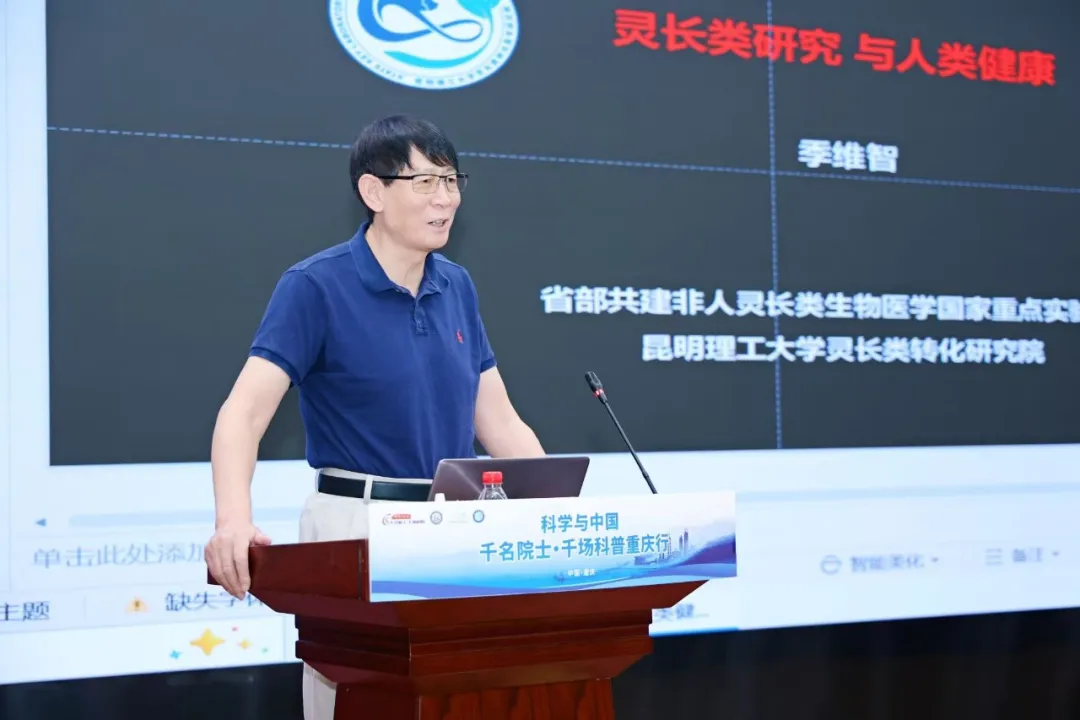
Academician Ji Weizhi combined his 43 years of profound accumulation in the field of non-human primate research, using popular language and cases that have attracted social attention, to explain the key role of non-human primates in the exploration of aging mechanisms and medical research in simple terms.
During the lecture, he also systematically popularized cutting-edge advances in experimental animal ethics, embryonic development, organ reconstruction, stem cell therapy, and disease model construction to help the public understand relevant scientific knowledge.
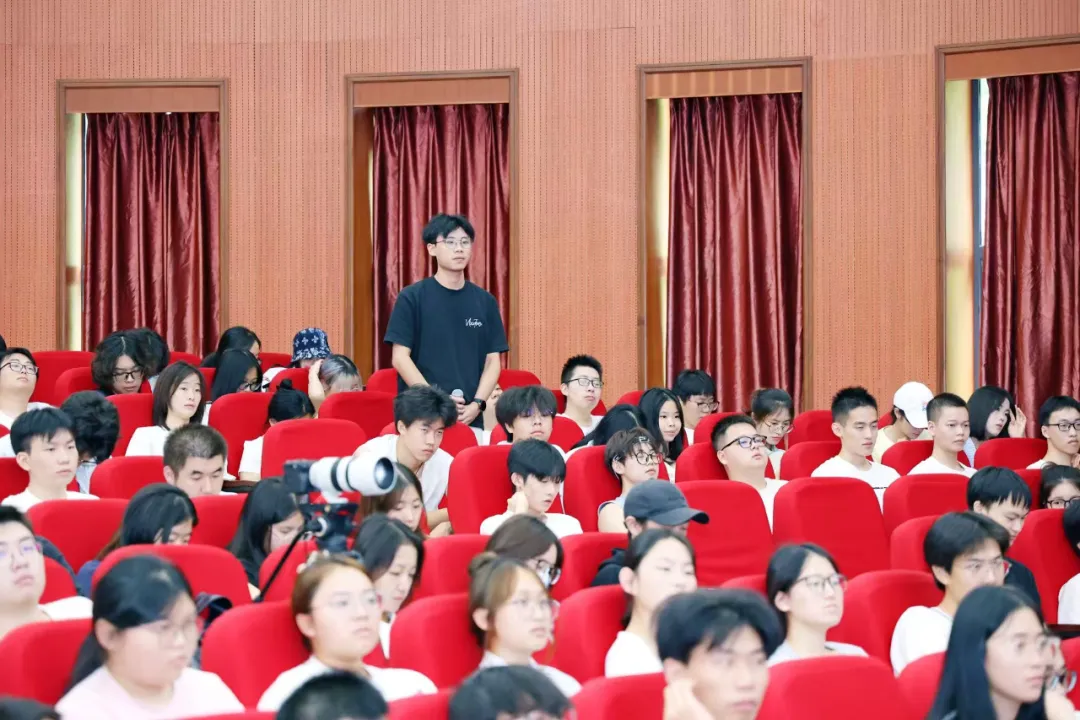
The atmosphere during the question-and-answer session was lively, with teachers and students actively asking questions on issues such as brain science research and the application prospects of primate models in the treatment of aging diseases and common diseases. “What breakthroughs has the team made in Alzheimer's disease and autism? ”“Can research on non-human primates help treat common diseases such as diabetes? ”Academician Ji Weizhi gave detailed answers one by one, and when talking about "how to improve scientific literacy", he encouraged the students with the words "persistence and hard work", hoping that everyone would persevere and keep moving forward on the road of science.
This "Science and China - Thousands of Academicians·Thousands of Popular Science" Chongqing trip focuses on the theme of "Stem Cells and Aging" and will also invite academicians and experts in related fields such as Li Jinsong, Gu Ning, Shi Yufang, Yang Yongguang, Zeng Fanyi, Li Wei, Wang Jichang, Hao Jie and others We visited government agencies, universities, primary and secondary schools, scientific research institutes, and enterprises across Chongqing to carry out 15 special science popularization activities to widely popularize scientific knowledge related to stem cells, promote the understanding of the whole society, and support work related to stem cell research and clinical translation applications. The offline audience is expected to exceed 5,000 people.
This event is a pragmatic measure to thoroughly implement General Secretary Xi Jinping’s important exposition on science popularization work and the spirit of an important reply to the “Science and China” academician and expert representatives. It is also a concrete practice to fully implement the newly revised “Science and Technology Popularization Law of the People’s Republic of China”. By inviting academicians and experts to the western region, we will conduct popular science lectures and introduce cutting-edge scientific progress, promote the popularization of high-end scientific research resources, create an atmosphere of loving science and advocating innovation, enhance the public's scientific literacy, stimulate young people's interest in scientific research, strive to promote science education, and lay a solid foundation for the development of scientific and technological talents.
The event was hosted by the Science Popularization and Education Working Committee of the Chinese Academy of Sciences, organized by the Institute of Zoology of the Chinese Academy of Sciences, the Stem Cell Biology Branch of the Chinese Society of Cell Biology, and the Chongqing Science and Technology Association, and co-organized by the First Affiliated Hospital of the Army Medical University, Jinfeng Laboratory, Chongqing High-tech Zone Science and Technology Association, and magazines inside and outside the classroom.


Number
023-68059937
Email:Jinfeng@jflab.ac.cn
Address:
No.313, Bella Road Chongqing High-tech Zone
Postal code: 401329

 渝公网安备50009802002274